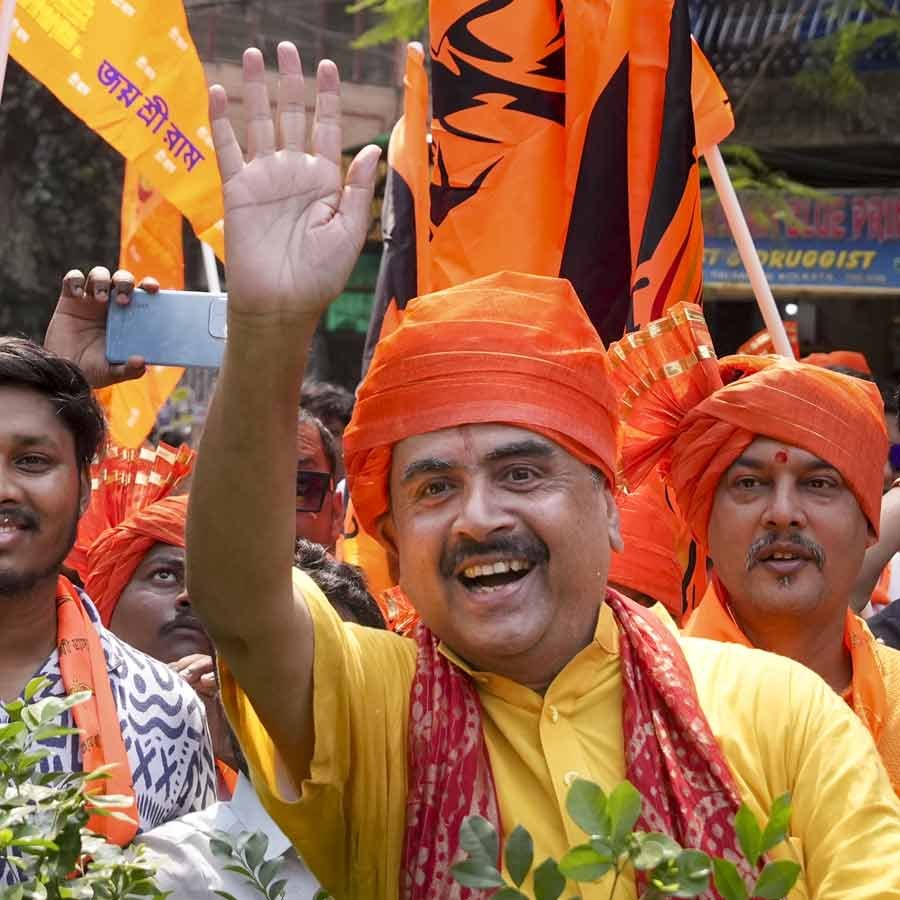
In the first phase—during the 2021 elections—the ‘Hitler-like’ Mamata was defeated by the BJP’s Suvendu in Nandigram. In the second phase, she lost in Bhabanipur. Suvendu had insisted on contesting from Bhawanipur; while he certainly fought—and won—his own seat in Nandigram, for him, Bhawanipur represented an opportunity to secure a ‘political advantage.’
Table of Contents
BJP’s win Bhawanipur
Mamata is the “daughter of the house” in Bhawanipur. Yet, Mamata Banerjee suffered defeat at the hands of Suvendu right in her own home turf. Five years ago, Mamata had gone to Nandigram to contest against Suvendu Adhikari—and was defeated. This time, Leader of the Opposition Suvendu Adhikari took up the challenge, entering the fray to contest against Mamata on her very own seat. Once again, the Trinamool supremo was defeated by Suvendu Adhikari. The “daughter of the house” had to face defeat right within her own home.
During the 2021 election, the autocratic Mamata referred to her own Bhabanipur constituency as her ‘elder sister’ and Nandigram as her ‘younger sister.’ Just five years prior, she had lost to her ‘younger sister’—a defeat inflicted by none other than Suvendu. This time around, she suffered a defeat in her ‘elder sister’ constituency—Bhabanipur—at the hands of that very same Suvendu. She lost by an even wider margin than in the previous election. Five years ago, Suvendu had defeated Mamata in the Nandigram constituency by a margin of 1,956 votes. This time in Bhabanipur, Suvendu further widened his margin of victory—winning by over 15,000 votes.
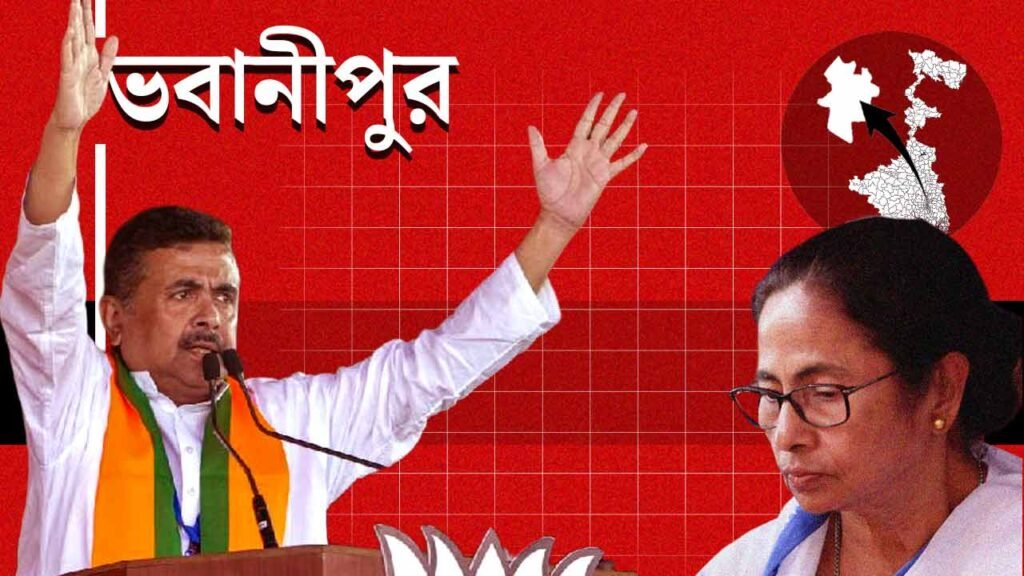
Graphic: Anandabazar.com
The final results for the Nandigram constituency were declared even before the outcome for the Bhabanipur seat was announced. Suvendu had already been declared the victor in Nandigram. Now, Leader of the Opposition Suvendu Adhikari has also secured a victory in the Bhabanipur constituency. Suvendu has finally achieved success in the challenge he had boldly issued to Chief Minister Mamata right in her own home turf. He defeated Mamata in her very own constituency. Holding his victory certificate for the Bhabanipur seat, Suvendu stated, “I dedicate this victory to all those who have sacrificed their lives for the cause of Hindutva. Defeating Mamata Banerjee was absolutely essential. With this, she has effectively been forced into political retirement.”
There was a noticeable sense of unease as the counting process began on Monday. From the beginning, a number of pre-election surveys had indicated that the race would be a close affair. A war of nerves started from the first round of the 20 rounds of counting that were planned. Suvendu overtook Mamata in the second round after Mamata had taken the lead in the first; Mamata reclaimed the lead in the third round. This was how the first several rounds played out. From that point on, Mamata continued to lead until the sixteenth round. But beginning in the seventh round, Suvendu gradually raised the number of votes he received and started to reduce the difference. By chipping away at the lead bit by bit in every round, he finally overtook Mamata in the sixteenth round.
Suvendu left his house early in the morning to go to his party office at Nizam Palace. He then continued on to Sakhavat Memorial School’s counting center. Suvendu had said at the time that even while he would fall behind in the first rounds of counting, he would eventually gain the lead, citing the demographics of Bhabanipur. Mamata, however, spent the entire morning at home. The Trinamool candidate sent a social media post to her party workers and counting agents after noticing early trends that suggested her party was lagging.
Mamata arrived at the Sakhavat Memorial School counting center in the afternoon, followed shortly thereafter by Suvendu. Both remained at the counting center until the evening. Later that evening, having left the counting center, “Hitler” Mamata returned to her residence in Kalighat.
A situation of mild tension also arose near the counting center shortly thereafter. In the afternoon, Trinamool workers and supporters were seated at a petrol pump located close to Sakhawat Memorial School. At that time, the police arrived and removed them from the spot. Moments later, a group of BJP workers and supporters attempted to approach the area from the opposite direction. Police personnel blocked them as well. It is alleged that, in their anger, the BJP workers and supporters vandalized chairs that had been set up by the Trinamool. Amidst this tension, shortly after 3:30 PM, Mamata arrived at the counting center. At that moment, BJP workers and supporters raised “Chor, Chor” (Thief, Thief) slogans directed at her.
Both Suvendu and Mamata had been present at the counting center at Sakhawat Memorial School since the afternoon. In the evening, while several rounds of counting were still pending, Mamata abruptly walked out of the counting center. An irate Mamata stated, “They are not allowing me to enter. The entire process is completely one-sided. They shoved me and assaulted me—right in front of the CRPF. I am a candidate, yet they denied me entry. This is a demonic party. They have looted over 100 seats. This Election Commission is merely a BJP Commission.” The Trinamool supremo further claimed that lodging a complaint regarding this matter with Chief Electoral Officer Manoj Agarwal had proven to be of no avail.
“What kind of victory is this?” the Trinamool supremo went on. It is not a moral victory, but an unethical one. It is completely prohibited. By force, they prevailed. Loot, loot, loot! We will undoubtedly recover.
Suvendu’s Vigorous Campaign in Bhabanipur
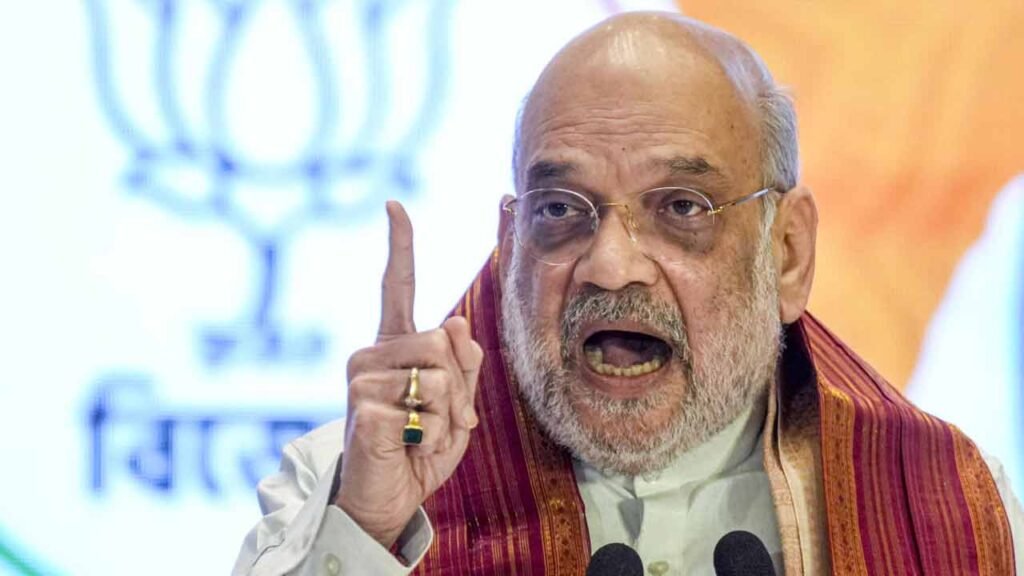
Since the announcement of the candidate list a month and a half ago, Bhabanipur has held a distinct significance in state politics. Union Home Minister Amit Shah himself accompanied Suvendu during the filing of his nomination papers for the Bhabanipur seat. Furthermore, Suvendu even released a separate manifesto specifically for the residents of Bhabanipur. During the initial phase of the campaign, Mamata could not devote much time to Bhabanipur, as she had to travel across the entire state to campaign for the remaining seats. In the final stretch of the campaign in Bhabanipur, Mamata undertook foot marches, held public rallies, and went from one residential complex to another to conduct small-scale meetings. In total, Mamata held seven public rallies in Bhabanipur—one of which, the meeting at Chakraberia, concluded within just a few minutes due to a dispute over loudspeakers—and conducted six foot marches. She also engaged in informal interactions with people from various communities within Bhabanipur. On the other hand, Suvendu, too, held 10 meetings, three processions, and one roadshow in Bhabanipur. Additionally, the Leader of the Opposition engaged in door-to-door outreach to connect with the public.
BJP Targets Bhabanipur
The BJP’s objective was to replicate the Nandigram scenario in Bhabanipur. The Trinamool, conversely, aimed to establish their party supremo’s constituency as the ‘frontrunner’ among Kolkata’s seats. The intensity of this contest was palpable not only during the campaign phase but also on election day itself. Breaking away from her customary routine, Mamata toured various polling booths throughout the day. Suvendu, too, was on the move. This electoral battle presented a unique challenge to both sides due to the situation arising from the Special Intensive Revision (SIR) of the voter list. During the SIR process, the names of over 50,000 voters were struck off the rolls in the Bhabanipur Assembly constituency. This factor, too, played a ‘significant’ role in the current election—for it can be safely assumed that the voters removed from that list did not belong exclusively to any single political party.
It was unclear which political party would eventually profit from the shifts in the electorate until the votes were tallied. This uncertainty resulted from Bhabanipur’s demographic makeup, which includes voters from a variety of linguistic and religious backgrounds. Bhabanipur is often referred to by Mamata herself as a “Mini India.” The constituency’s eight wards—63, 70, 71, 72, 73, 74, 77, and 82—reflect its eclectic nature. In terms of demographics, about 24% of Bhabanipur’s population is Muslim. Non-Muslims make up the remaining 76% of the population, which also includes members of various minority groups, most notably Sikhs and Jains.
About 42% of that 76% non-Muslim population speaks Bengali. Non-Bengalis (Gujaratis, Punjabis, Marwaris, Biharis, and Odias) make up the remaining 34%. Bengalis predominate in Bhabanipur’s wards 72 and 82. On the other hand, Wards 63, 70, 71, 73, and 74 have long been home to Gujaratis, Punjabis, and Marwaris. Muslims make up the bulk of the population in Ward 77.