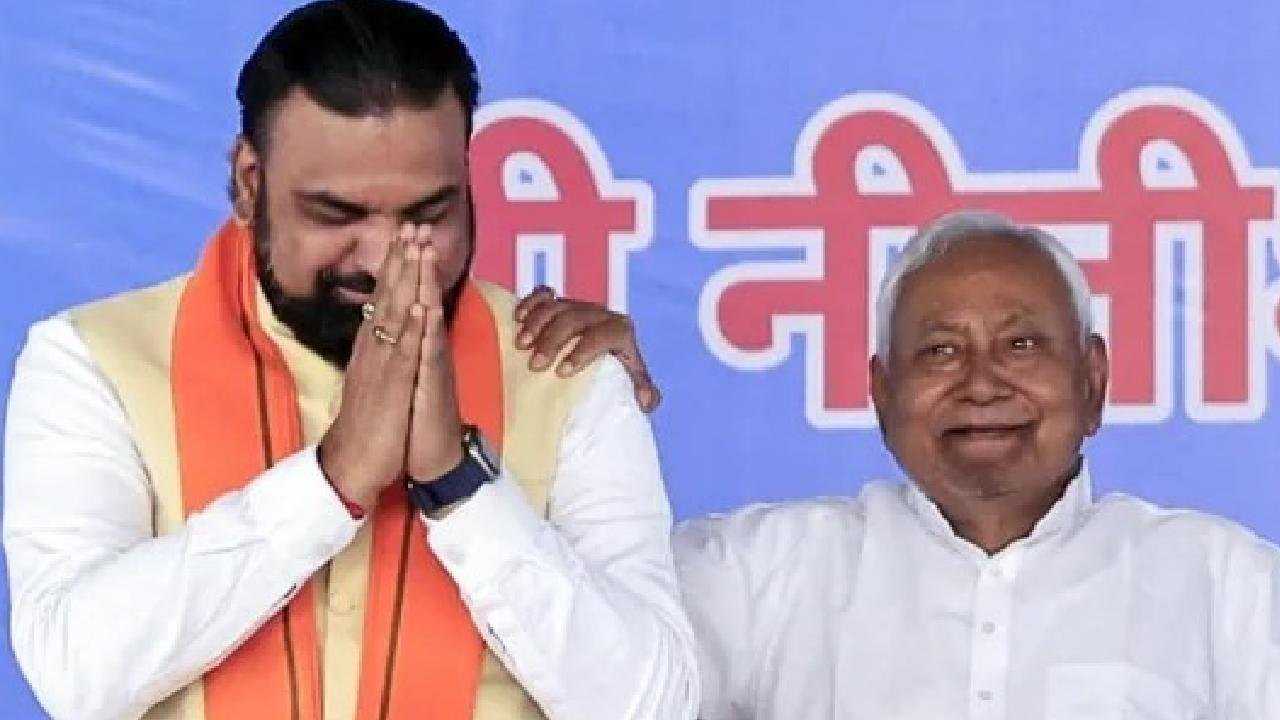
Samrat Chaudhary will take over as Bihar’s chief minister after Nitish. From March 2023 until July 2024, Samrat Chaudhary presided over the Bihar BJP. He has also served as a Minister of State for the departments of Sports, Finance, Panchayati Raj, and Urban Development and Housing.
Great Nitish Kumar
Nitish Kumar, the leading leader of the Janata Dal (United), is expected to be replaced as Chief Minister of Bihar by Samrat Choudhary of the Bharatiya Janata Party. He now bears the heavy burden of “filling a massive void” (or “filling big shoes”) in the state of Bihar.
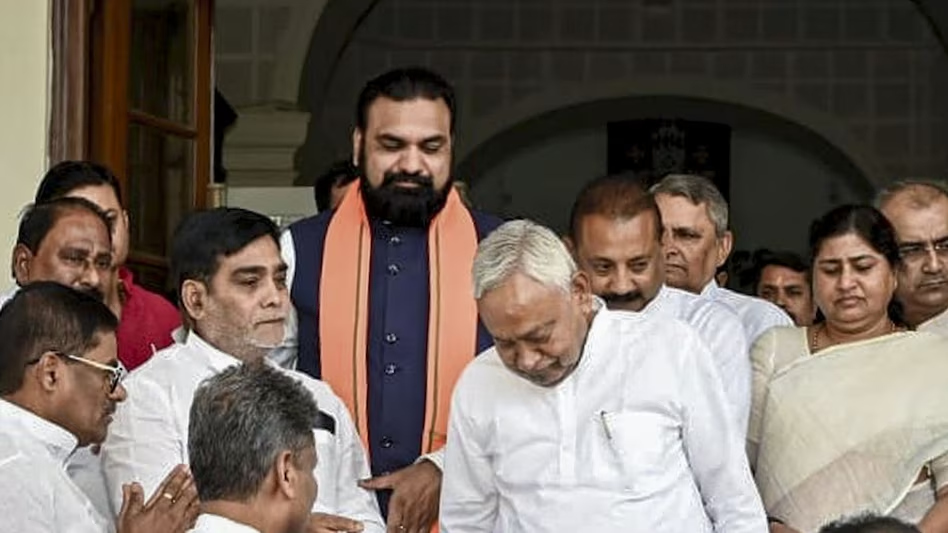
For well over fifty years, Nitish Kumar has had complete control over Bihar’s political system. He rose to a position of unprecedented distinction because to his remarkable personality and influence. As a new member of the Janata Party, he started his political career in 1974. This 75-year-old seasoned leader had already made a lasting impression on history by April 2026, when he resigned as Chief Minister. He had become a “Sushasan Babu” (an icon of excellent government), with an unmatched capacity to influence the populace.
He is still regarded as “Mr. Bihar” in many ways, having held the position of Chief Minister a record ten times and being an essential component of the political, socioeconomic, and cultural landscape of the state. This is the main obstacle facing Samrat Choudhary, the BJP, and everyone who will eventually take over as Chief Minister.
Who is Samrat Choudhary?
Samrat Choudhary comes from a distinguished political family. He was born in the Munger neighborhood on November 1968.
His mother, Parvati, won the same seat in 1998 on behalf of the now-defunct “Samata Party,” while his father, Shakuni, was elected to the Legislative Assembly (MLA) six times from the Tarapur constituency. Samrat Choudhary came back to take back this family stronghold in the 2025 elections.
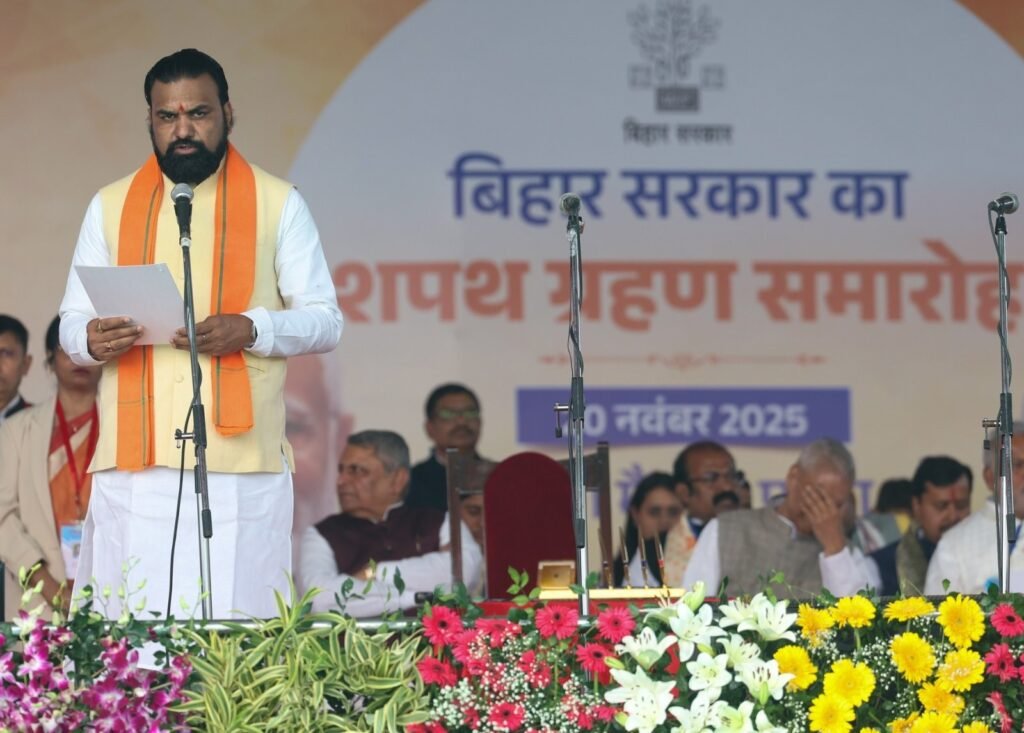
The father, mother, and son together have won that seat in nine of the last twelve elections. The 57-year-old Samrat Choudhary started his political career in 1990.
He was appointed Minister of Agriculture in 1999, when the BJP was a coalition partner and Rabri Devi, the wife of Lalu Prasad Yadav, was leading the government. He went on to win the assembly seat in the 2000 and 2010 elections. In addition, he was the Chief Whip in 2010, while the BJP was in the opposition.
Despite being mostly affiliated with Nitish Kumar’s JD(U) and Lalu Yadav’s Rashtriya Janata Dal, he tried to create a rift within the party in 2014 and defected to the BJP, bringing with him over a dozen lawmakers.
Although the BJP’s top leadership may have found the incident a little disturbing, the way he has subsequently vigorously defended the saffron party over the course of more than ten years should surely suffice to allay any such concerns.
Samrat Choudhary also served as From March 2023 until July 2024, Samrat Chaudhary presided over the Bihar BJP. He has also served as a Minister of State for the departments of Sports, Finance, Panchayati Raj, and Urban Development and Housing.
Samrat Choudhary: Why?
The BJP has proven to be exceptionally adept at caste and class-based calculations during the last ten years; by skillfully rearranging Chief Ministers and candidates from various communities, they have, for the most part, developed a “winning formula” that has allowed them to win.
The party’s top leadership took a long time to reveal the names of the new Chief Ministers after winning the assembly elections in Madhya Pradesh, Rajasthan, and Chhattisgarh in 2023. And when those names were eventually made public, their painstaking calculations became quite evident.
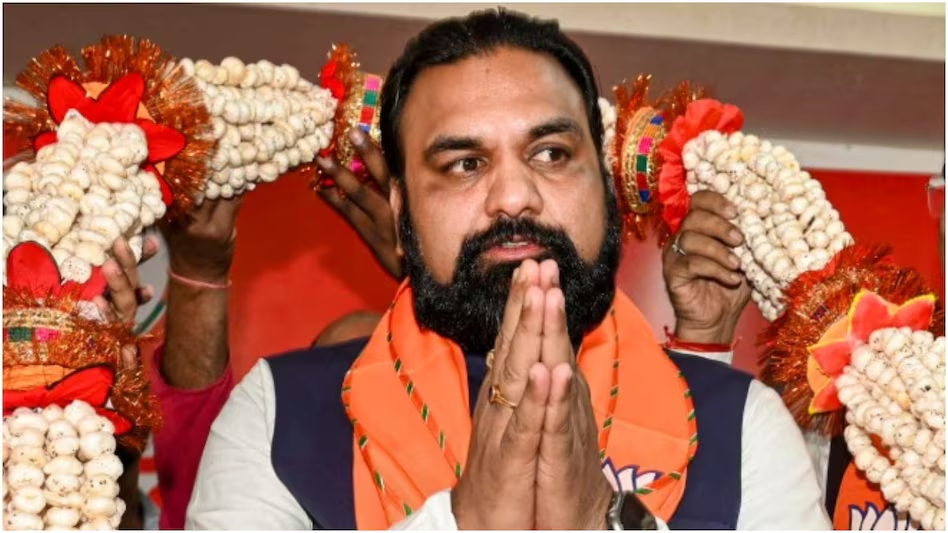
In Madhya Pradesh, for example, the party painstakingly created a leadership structure intended to placate various communities and vote banks, particularly the Yadavs, Brahmins, and Dalits. Similarly, the party nominated a member of the Adivasi and Brahmin communities as Chief Minister in states like Chhattisgarh and Rajasthan, where these groups make up a sizable share of the population.
The choice of Samrat Chaudhary is seen by experts as yet another strategically sound decision.
According to the caste survey conducted by the Nitish Kumar government in 2023, he belongs to the politically influential ‘Kushwaha’ community, which constitutes 4.3 percent of the state’s total population.
Traditionally recognized as an agrarian community, the Kushwahas represent Bihar’s second-largest single OBC (Other Backward Classes) group—ranking immediately after the Yadav community. Notably, RJD founder Lalu Prasad Yadav and his son, Tejashwi Yadav, hail from this very Yadav community.
For the BJP—which is striving to consolidate its position in the post-Nitish Kumar era—securing the allegiance of the Kushwahas is of paramount importance. This is particularly crucial given that the party currently lacks any alternative leadership emerging from the ‘Kurmi’ community—the very community to which the outgoing Chief Minister, Nitish Kumar, belongs.