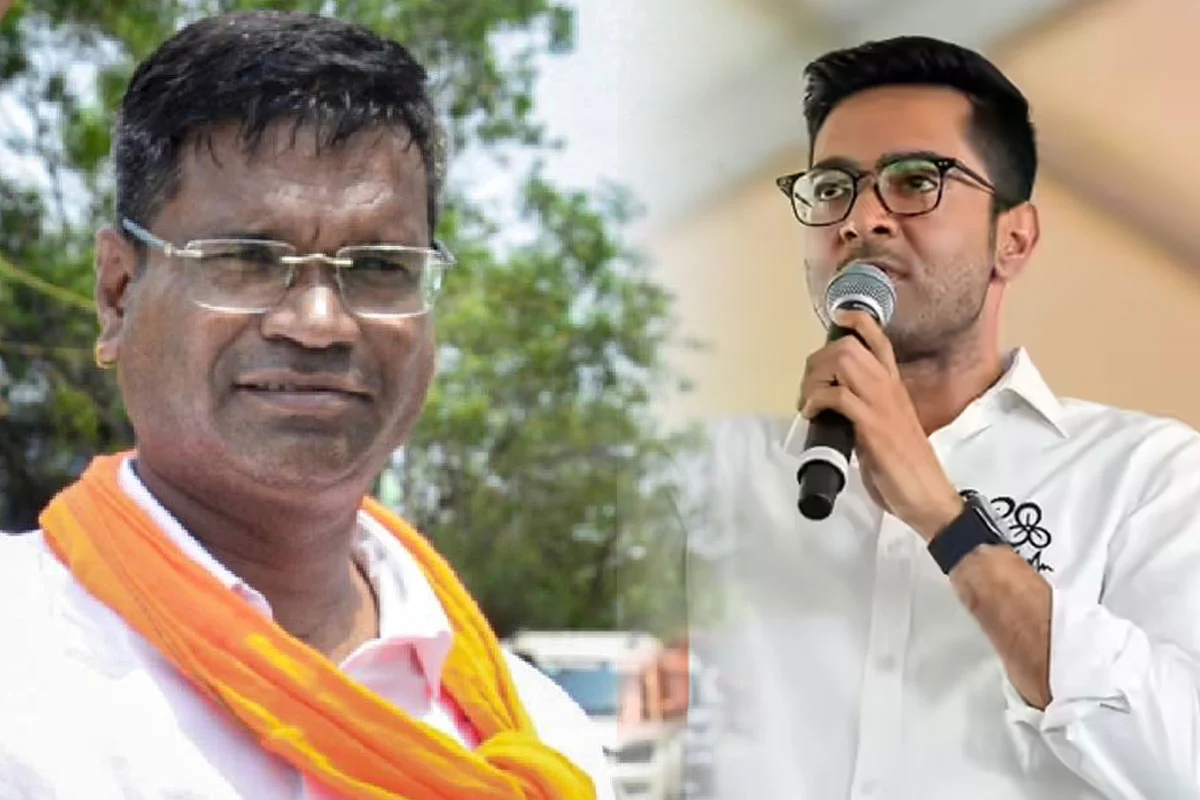
Abhishek’s “Diamond Model” for preventing vote-looting came to light on Sunday following the declaration of the election results in Falta. In this election, no political party was able to level allegations of rigging or malpractice. On the contrary, the voting in Falta had been annulled and a fresh poll conducted specifically to ensure a free, peaceful, and transparent election.
Table of Contents
Abhishek’s ‘Diamond Model’ of Vote Rigging
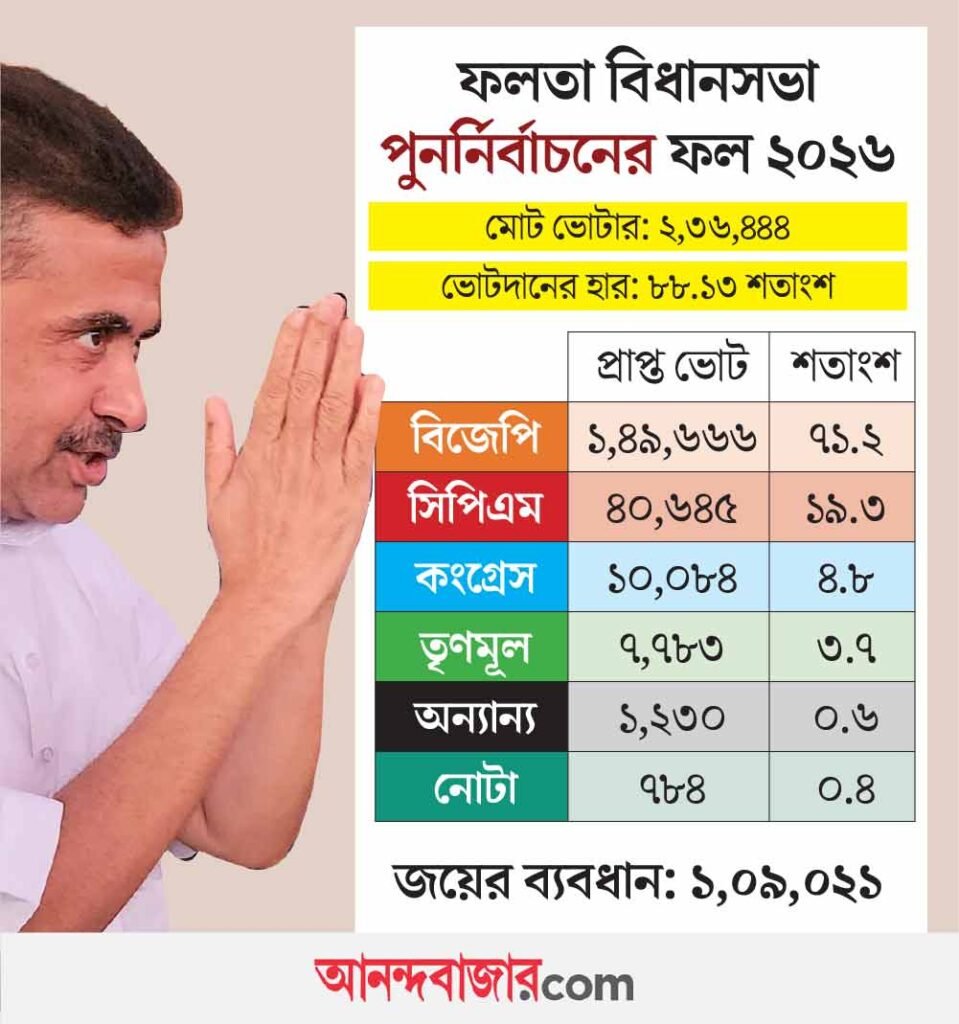
In the Falta election, many had expected the BJP to win. There was also little question that the victory would come by a wide margin. But after the votes were counted, BJP candidate Debangshu Panda‘s final margin of victory was unimaginable. In Falta, the BJP candidate prevailed by more than 109,000 votes. However, the Trinamool Congress’s performance was much more remarkable than the BJP’s margin of victory. Abhishek Banerjee had topped the BJP in Falta by an astounding 168,000 votes just two years prior, according to the “notorious Diamond Harbour Model.” In the same constituency this time, Abhishek’s party was behind the BJP by about 142,000 votes.
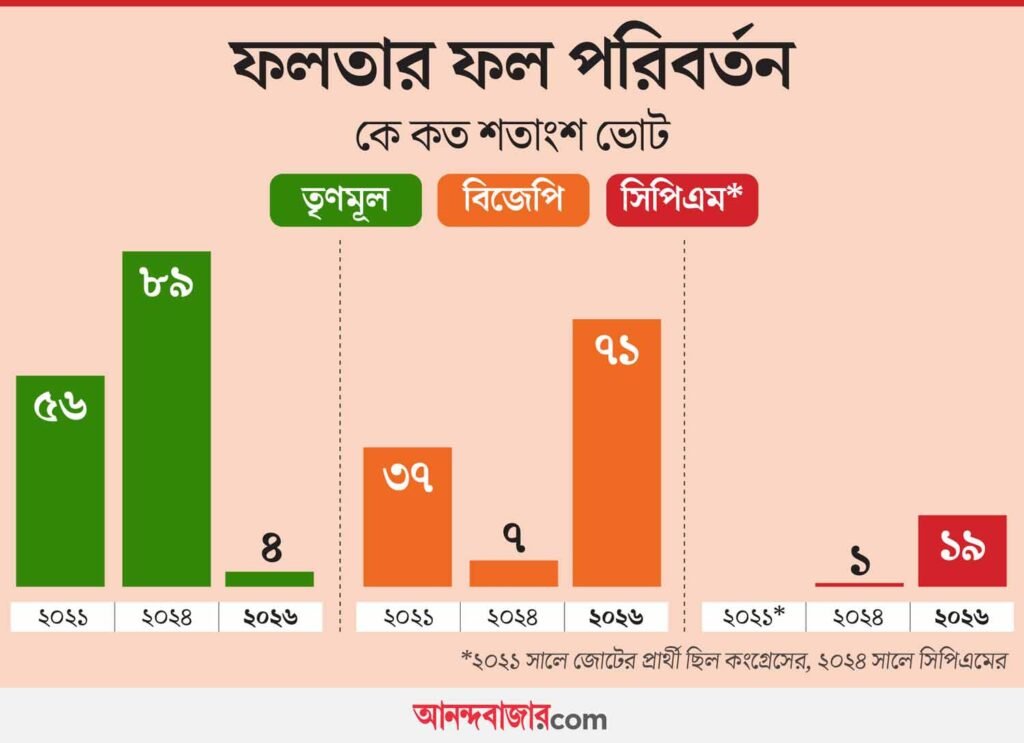
According to today’s election results, the BJP received 71% of the total votes. In Falta in 2024, the CPI(M) received only one percent of the vote; today, it has 19 percent. On the other hand, the Trinamool, which received 89 percent of the vote in 2024, has fallen to just 4 percent.
In 2024, Abhishek secured a victory in Diamond Harbour by a margin of approximately 711,000 votes—though, at the time, that result gave rise to various questions. Allegations of rampant booth capturing and voters being barred from accessing polling stations had surfaced during that election. However, these issues were ultimately buried beneath the dust kicked up by the Trinamool’s triumphant juggernaut. Yet, following the declaration of results on Sunday, it became abundantly clear that this suppressed resentment had, all along, been smoldering beneath the soil of Falta and Diamond Harbour.
As of far, no political party has accused the election results announced in Falta of being rigged or malpracticed. In order to guarantee a free, peaceful, and transparent election, the Election Commission had declared that the voting in Falta was void and new polls were mandated. The CPI(M) candidate, whose party came in second in this re-election, openly admitted that there had never been a free campaigning atmosphere in Falta prior to May 4th. The general people was also seen making their way to the polling places on election day in a generally joyous manner. The voter turnout rate surpassed 88% by the conclusion of the day.
Chief Minister Suvendu Adhikari posted on social media as soon as the election results were announced, writing: “A fraudster—who parachuted in only to be dubbed a ‘General’—has left no crime uncommitted.” This “cat in a tiger’s skin” did everything in his power to strengthen his own criminal gang, even going so far as to silence the voice of democracy.Naturally, Abhishek was his goal.
“No one has forgotten what transpired during the 2024 Lok Sabha elections,” wrote Amit Malviya, the BJP’s central co-in-charge for West Bengal. On numerous polling machines, the BJP’s insignia was purposefully hidden, making it impossible for anyone to vote for the party. That same Falta Assembly constituency has exposed the truth today.”
“The results of this election demonstrate that the ‘Nephew’s Diamond Harbour Model’ was, in fact, a model of vote-looting,” said Sujan Chakraborty, a member of the CPM Central Committee. These findings show that the Trinamool was never a good substitute for the BJP.
Allegations against Trinamool in Falta
Numerous accusations were made against the Trinamool Congress in Falta even on the day of voting, April 29 (an election that was later canceled). These included hiding the BJP’s election symbol, putting perfume on the party’s voting button, setting up secret surveillance cameras inside polling places, changing the angles of CCTV cameras to hide instances of fraudulent voting, and intimidating families who were known to support opposition parties in order to stop them from voting. The Falta polling was canceled and a mandate to hold a new poll was issued in response to these same accusations.
These kinds of accusations were once made against the CPI (M), whether in Keshpur, West Medinipur, or Arambagh, Hooghly. The CPI(M) used to assert that these regions were the party’s “impregnable strongholds,” that they had “invincible organizational machinery” there, and other similar claims. But following a nationwide defeat in the 2009 Lok Sabha elections, the CPI(M) was unable to provide evidence of the purported “impregnable strongholds” or “invincible organizations.” Conversely, the party’s situation started to worsen in those same parts of the state starting in 2011. That is still the case now. It was 2001. Buddhadeb Bhattacharjee’s Left Front and Mamata Banerjee’s Trinamool Congress alliance faced off in the election. The CPI(M) candidate for the Keshpur Assembly seat, Nandarani Dal, won by a margin of more than 108,000 votes in that election, which was characterized by intense tension. Both the overall population and the number of registered voters were far smaller in that election, which took place 25 years ago, than they are now. As a result, the CPI(M) victory margin in Keshpur was an exceptional record by the norms of the time. The size of the victory margin in Keshpur regularly came up in various political discussions not just in West Bengal but throughout the entire nation; in fact, the Keshpur results were frequently highlighted as a prime example of extraordinary electoral manipulation.