A vaccine to prevent bird flu is on the way. Graphic: Anandabazar.com.
Moderna has claimed to have developed a vaccine against bird flu and influenza that is capable of combating any variant of the virus. The virus responsible for avian influenza—or bird flu—is mutating so rapidly that preventing it has become an extremely difficult task. The U.S. pharmaceutical manufacturer Moderna asserts that it has developed a vaccine for this purpose using ‘messenger RNA’ or ‘mRNA’ technology. Furthermore, it has also been claimed that the application of ‘mRNA’ technology in a vaccine used for the treatment of pancreatic cancer has successfully extended patients’ survival periods.
Table of Contents
Moderna claime
Given the manner in which bird flu has been spreading over the past year, the risk of the virus infecting humans has increased significantly. Reports of bird flu infections have emerged in India, much like in various other countries across the globe. In fact, cases of human infection with the bird flu virus have even been reported in West Bengal. It was previously understood that this virus primarily spreads within poultry farms involving ducks and chickens; occasionally, reports of migratory birds succumbing to the virus would surface. However, bird flu is now spreading with such alarming intensity that, alongside animals and birds, humans are also falling victim to the infection. Containing this virus is no easy task.
It has been observed that Avian Influenza—specifically the H5N1 virus—is rapidly mutating and altering its characteristics. Consequently, it is proving impossible to suppress the virus using a single type of vaccine. Therefore, leveraging Messenger RNA (mRNA) technology, the American pharmaceutical company Moderna has developed a new vaccine designed to provide protection against bird flu.
The ‘Bird Flu’ virus is highly contagious. If the virus enters the body of a single duck or chicken within a farm, it is observed that, within a matter of days, the entire flock becomes infected. Furthermore, migratory birds carry the virus from distant lands; coming into contact with them also facilitates the spread of the virus. Other animals, too, can contract the infection through contact with infected birds. Until recently, however, it was believed that the risk of this ‘Bird Flu’ virus spreading to humans was relatively low. Yet, the virus has now acquired that very capability. This ‘Bird Flu’ virus can rapidly enter the bodies of healthy individuals through the sneezing, coughing, saliva, or excreta of infected humans. Those at particular risk include individuals who work in various poultry farms or who handle and sell raw meat from ducks, chickens, or other birds. The virus can also spread to humans from infected pet birds kept at home. Consequently, the necessity of preventing this variant of influenza has increased significantly.
Final-stage trials for Moderna’s mRNA-1018 vaccine are now in progress, according to the company. They said that about 4,000 people are being checked for the vaccine. The effectiveness of the vaccination will then be assessed in a much broader population. If all goes according to plan, permission will be sought in order to quickly provide the vaccine to the market.
There are currently influenza vaccines on the market. But according to Moderna, this vaccine will be able to fight off numerous other infectious types of influenza in addition to the bird flu virus. H5N1 and H7N9 are the two strains of bird flu, also known as avian influenza, that have been found in India thus far. Both variations are infectious. However, the administration of this vaccination is said to lower the risk of influenza.
treatment of pancreatic cancer
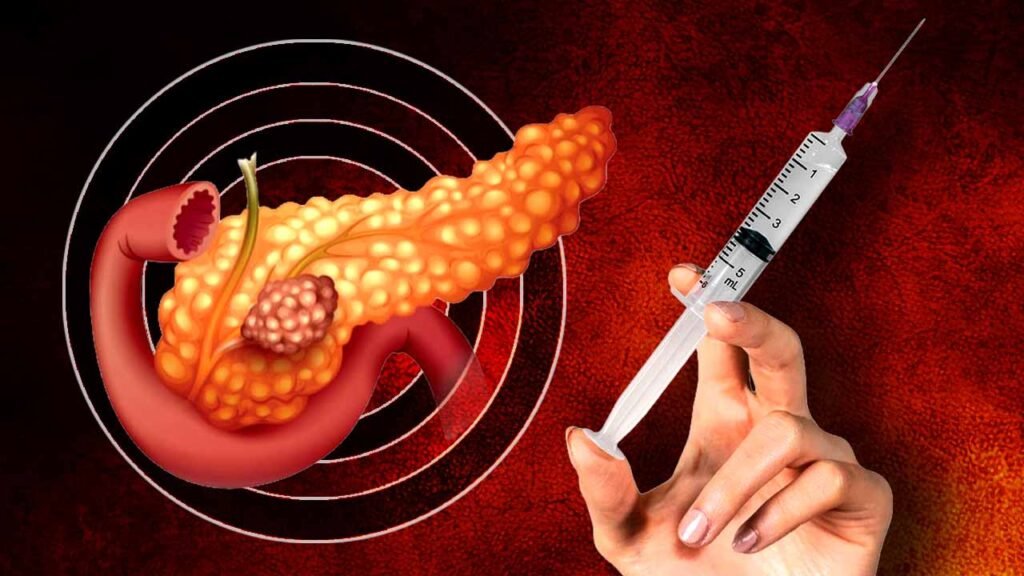
A vaccine for pancreatic cancer is on the way. Graphic: Anandabazar.com.
Has a cure for pancreatic cancer been discovered at last? A novel pancreatic cancer vaccine has been developed by two pharmaceutical companies: Genentech in the United States and BioNTech in Germany. Messenger RNA, or “mRNA,” technology was used to manufacture the vaccine. They assert that this novel vaccine can both reduce the patient’s pain and slow the cancer’s progression. Additionally, they claim that the patient will be able to survive for many years with the fatal illness in their body even if the cancer is not healed.
Messenger RNA, or mRNA, technology was a true savior during the COVID-19 pandemic. COVID-19 vaccines were created at an unprecedented rate thanks to this technology. Now, researchers are using the same technology to create a cancer vaccine. This is a kind of “therapeutic vaccine,” intended for direct patient administration. Generally speaking, a “vaccine” is a preventive measure—a drug given *before* the commencement of a disease to fend against infection. But this pancreatic cancer vaccine is different in that it is given *after* the patient has received a diagnosis of the illness. However, it works similarly to other vaccinations in that it makes the body’s immune system—its natural defense system—aware of the danger, allowing it to locate and eliminate the cancer cells.
Messenger RNA serves the purpose of communicating information about any anomalies that may be present in the body’s cells. A dosage of this vaccination will activate the body’s immunological T-cells if aberrant cell growth and division begins in any part of the body and begin to manifest as a tumor. Known as “killer cells,” these T-cells will try to eliminate any malignant proteins they come across.
“Pancreatic Ductal Adenocarcinoma” is the most dangerous type of pancreatic cancer. Controlling this malignancy becomes almost impossible once it starts to spread. Furthermore, this kind of cancer spreads slowly throughout the body and is difficult to identify. The majority of patients with this type of cancer do not live very long. The new vaccination is intended to stop cancer cells from proliferating, which will greatly lessen the disease’s severity. According to researchers, the vaccination will try to cure the cancer by killing the cancer cells if it is found early. However, by stopping the growth of cancer cells, the vaccination can still greatly lessen the severity of the illness even if the cancer is discovered at the third or fourth stage. The patient will be able to live longer and experience less agony as a result.